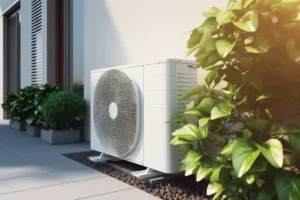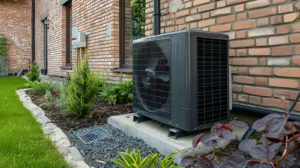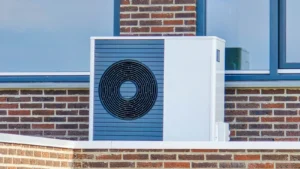
Almost certainly. A heat pump’s outdoor unit stands on less than a square metre of ground. What decides where it goes is room for air to flow, noise for the neighbours and the planning rules where you live.
It’s one of the first questions people ask, especially with a terraced house, a new build or a yard instead of a garden. Air source heat pumps are smaller than most people expect, and you don’t need a lawn. A side passage, a patio or a back wall can all work.
How big is an air source heat pump?
Most outdoor units are about a metre wide and half a metre deep. Bigger outputs are taller rather than wider, so the space on the ground hardly changes.

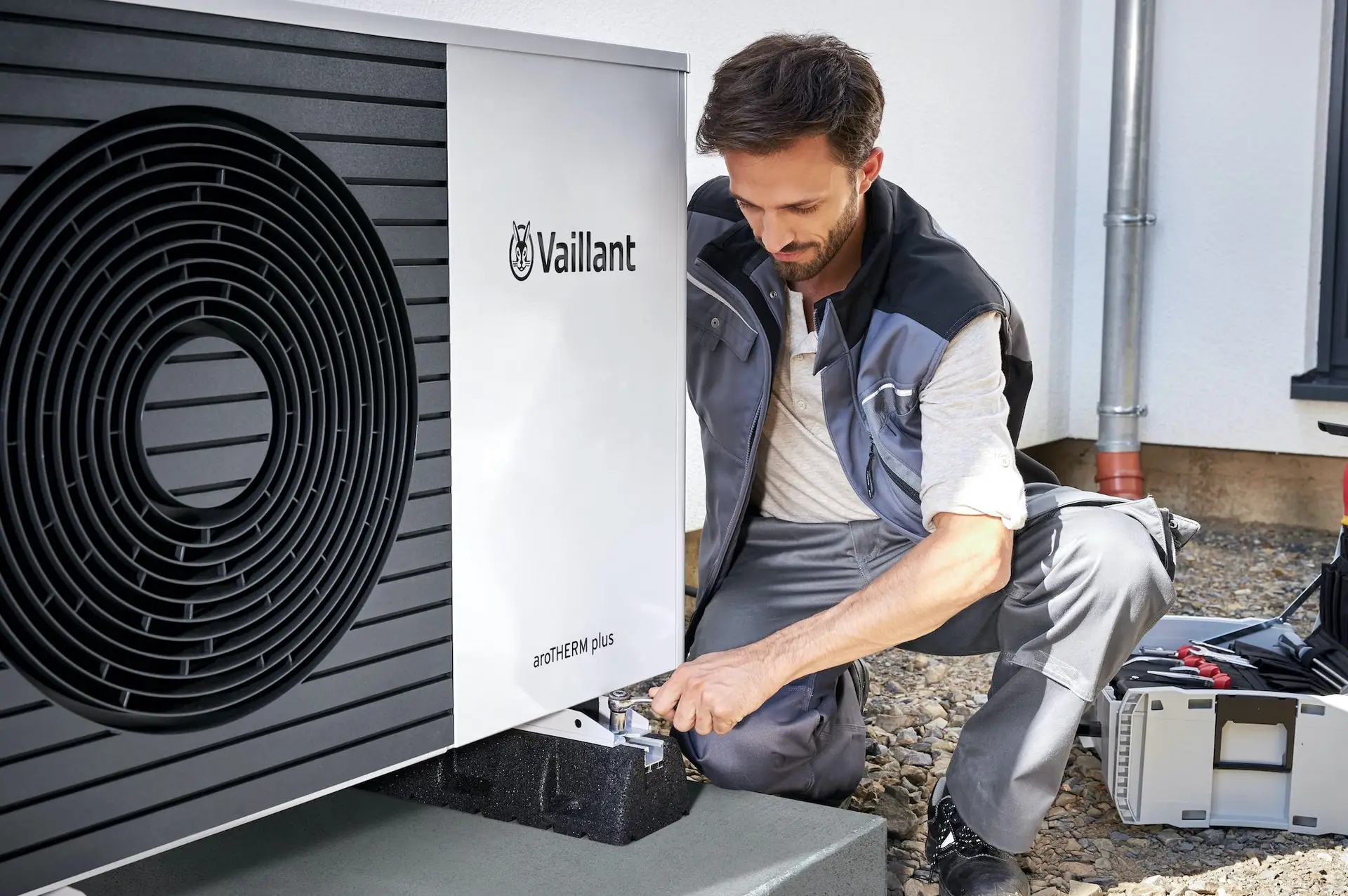
aroTHERM plus
- 3.5kW and 5kW
- 765 x 1,100 x 450mm
- 7kW
- 965 x 1,100 x 450mm
- 10kW and 12kW
- 1,565 x 1,100 x 450mm

Vitocal 150-A
- 4kW to 10kW
- 841 x 1,144 x 600mm
- 10kW and 13kW
- 1,382 x 1,144 x 600mm
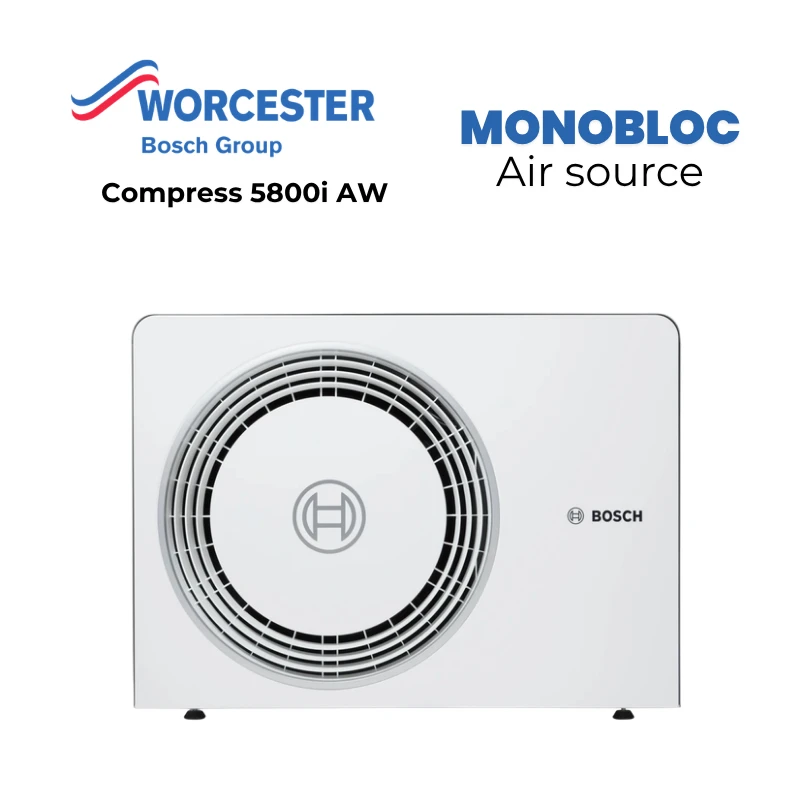
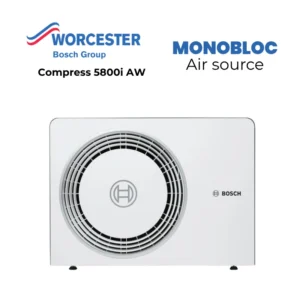
Compress 5800i AW
- 4kW, 5kW and 7kW
- 800 x 1,100 x 540mm
- Space in front
- 2m (800mm minimum)

Logic Air
- 4kW and 5kW
- 798 x 1,095 x 518mm
- 8kW and 10kW
- 1,008 x 1,095 x 518mm
Sizes from the manufacturers’ specification sheets, checked November 2026. Your installer will confirm the right output after a heat loss survey. Split models need a small indoor unit too, as explained in monobloc vs split heat pumps.
How much space do you need around it?
A heat pump draws air in at the back and blows cold air out of the front, so it needs room to breathe.
400mm behind
1m side1m side
2m clear in front
Example clearances for the Worcester Bosch Compress 5800i AW. Other models are similar, and your installer will check the exact figures.
Clear air in front
Nothing blocking the fan, such as a shed, a fence panel or the bins.
A firm, level base
A small concrete base, sturdy feet or a solid wall for brackets.
Somewhere to drain
It drips water when it defrosts, so keep it off paths people use.
A short pipe run
Close to the house wall keeps the pipes into your home short.
Where can it go in a small garden?
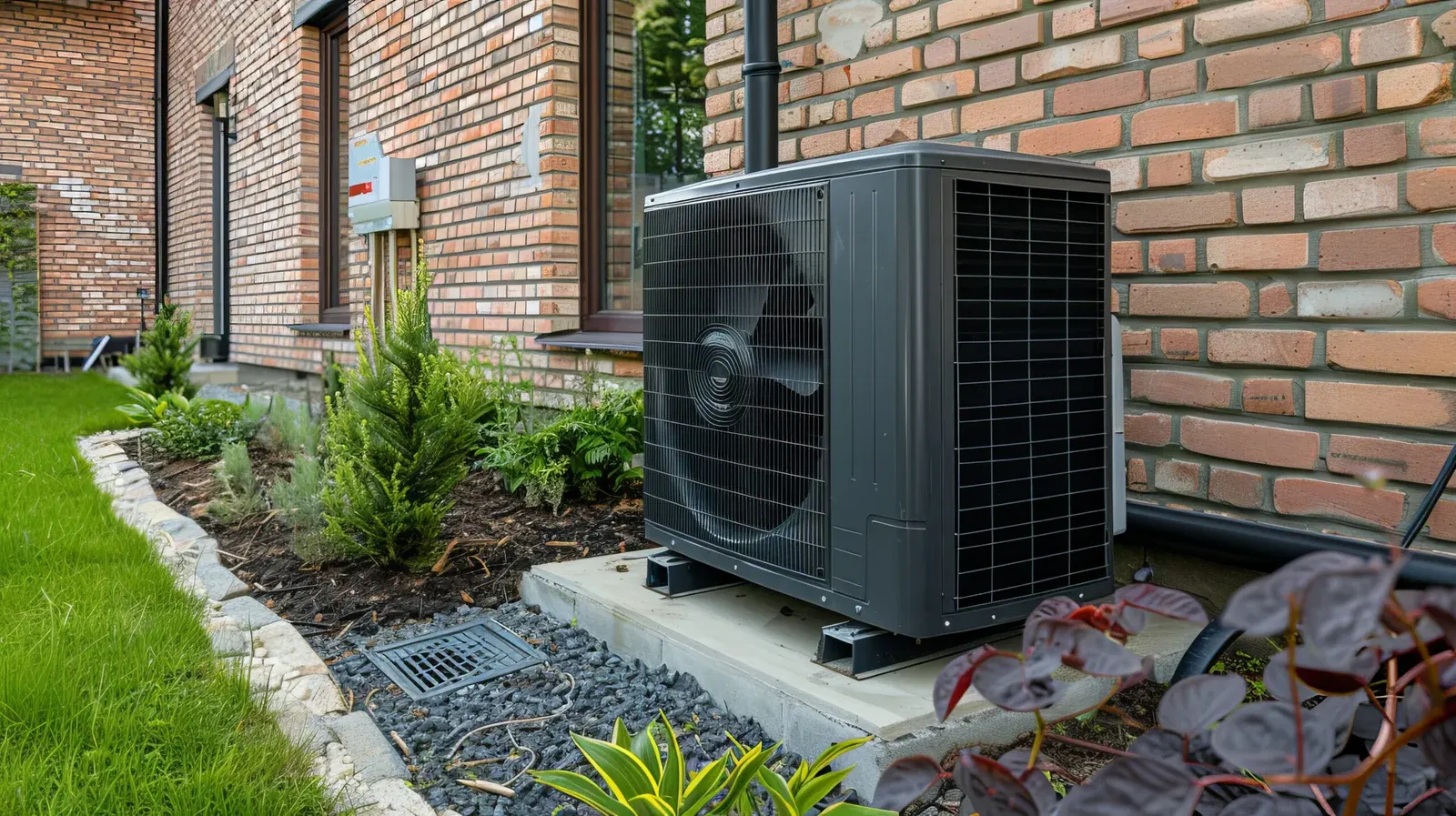
Against a back wall
The most common spot for terraced and semi-detached homes, on the ground or on wall brackets.
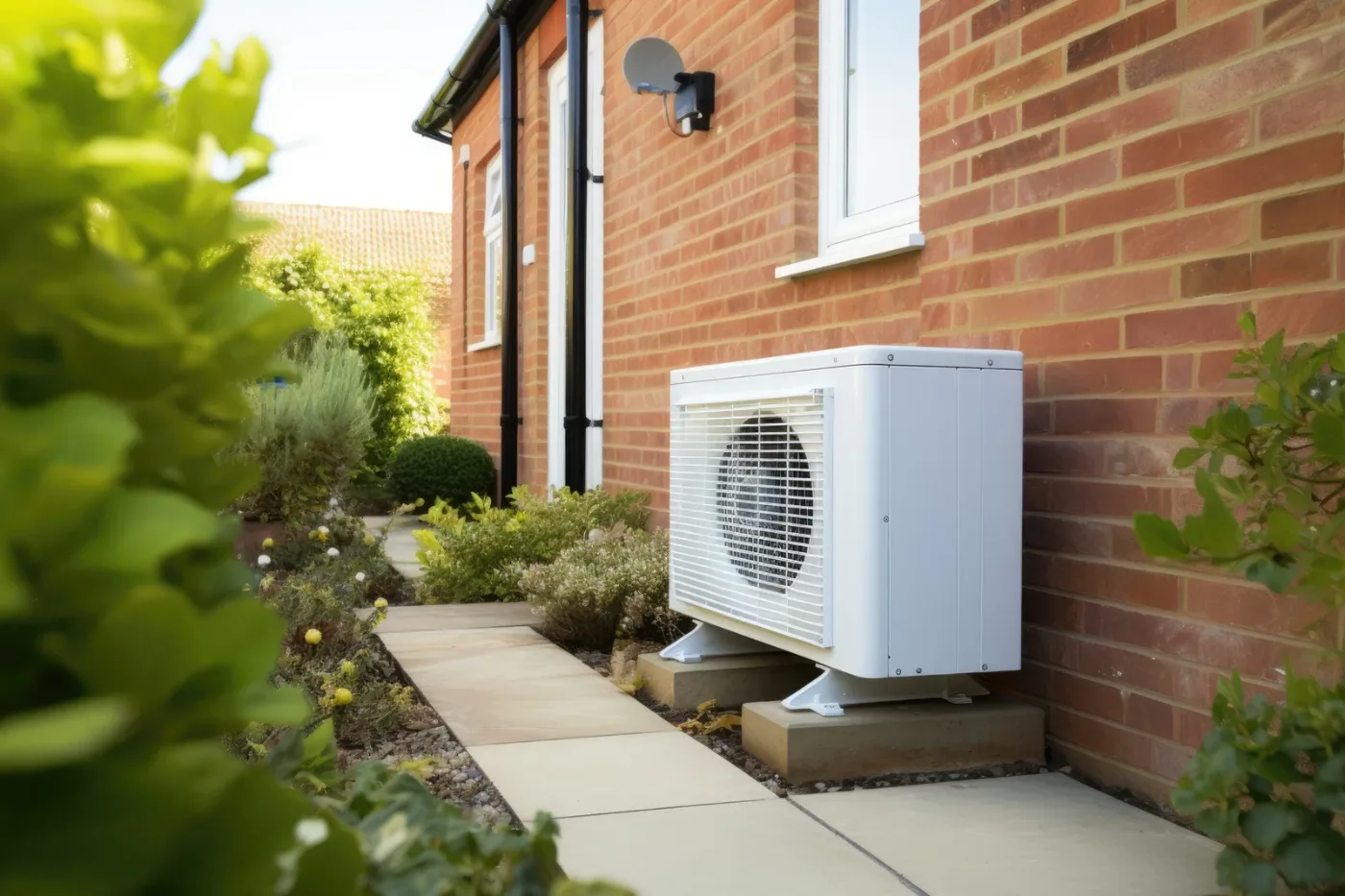
In a side passage
Works well if there’s room in front of the fan and you don’t need the path for bins or bikes.
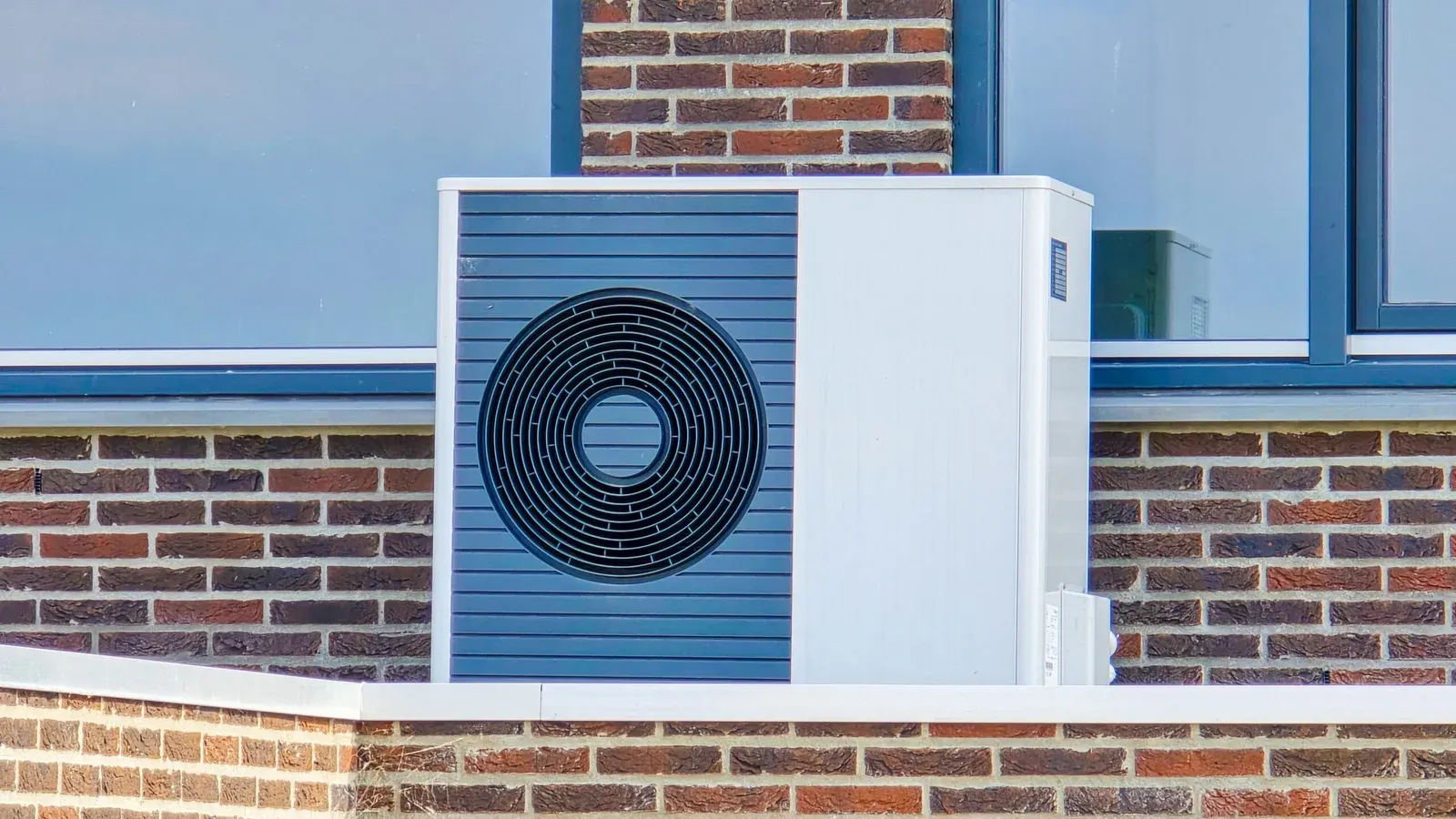
On a patio or yard
Fine on level paving or decking that drains properly.
Flat roofs can work in England if the unit is at least 1m from the edge. The front of the house is possible in England with limits, but in Scotland a free-standing unit there needs planning permission. Most homes also need indoor space for a hot water cylinder, which is worth checking too. Still deciding? See heat pump vs gas boiler and air source vs ground source.
England and Scotland at a glance
Most home heat pumps are permitted development in both countries, so there’s no planning application if every condition is met. The details differ.
- How many
- Two on a detached house, one on other homes
- Size
- Up to 1.5m³ on a house, 0.6m³ on a block of flats
- Boundary
- No minimum distance since 29 May 2025
- Noise
- Must pass MCS 020a: 42dB(A) at the neighbour’s window
- Front of house
- Not on a road-facing wall above the ground floor
- Listed buildings
- Planning permission needed
- How many
- One per building, so a semi or terrace counts as one
- Size
- No volume limit. Up to 3m high, or 1m out from a wall
- Boundary
- No set distance in the rules
- Noise
- Must meet MCS standards: 42dB at 1m from a neighbour’s room
- Front of house
- A free-standing unit can’t sit in front of the house
- Listed buildings
- Planning permission needed, also in World Heritage Sites
Conservation areas have extra limits in both countries, and an Article 4 Direction or a planning condition can remove permitted development. Scotland consulted on changes in 2025, so check the latest position with your installer or council.
With England’s boundary rule gone, the noise calculation usually decides where a heat pump can go. A quieter model, a solid fence in the way or moving it a metre or two can make the difference. Our aroTHERM plus vs Compress 5800i comparison looks at two of the quietest.
Ask a heat pump installer to look at your space
A survey answers it for certain. The installer measures the space, runs the noise calculation, checks the planning rules and sizes the heat pump for your home.


 The Heating PeopleManchester and the North West
 Enhanced Energy SolutionsSouth Yorkshire and Derbyshire
 WLV Plumbing & HeatingWest Midlands
 Mason Plumbing & HeatingAylesbury and Buckinghamshire
 Warm & Cool LondonLondon
 Bromley EnergySouth East London and Kent
 Evo Heating & RenewablesEpsom, Surrey and South London
 Option Energy SolutionsSussex
 Somerset Heat Pump & SolarSomerset
Can’t see your area? Browse all our recommended installers.
Frequently asked questions
Can a heat pump go right next to my fence?
In England, yes, since the 1 metre boundary rule was scrapped on 29 May 2025, as long as it passes the noise calculation. Scotland has no set distance in its rules, but the noise standard still applies.
Can I put a heat pump in my front garden?
In England, usually yes, unless it’s on a road-facing wall above the ground floor or you’re in a conservation area. In Scotland, a free-standing unit in front of the house needs planning permission.
Does a bigger house need a bigger garden?
Not really. Bigger heat pumps are taller rather than wider. A Vaillant aroTHERM plus is 1,100mm wide from the 3.5kW to the 12kW model, while the height goes from 765mm to 1,565mm.
Can I have a heat pump in a flat?
Sometimes. England allows one unit per block of flats under permitted development, up to 0.6m³, and Scotland allows one per building. You’ll also need permission from your freeholder or landlord.
Do I need planning permission?
Usually not in England or Scotland, if every permitted development condition is met. You will for a listed building and for some positions in conservation areas.
Not sure if your garden is big enough?
We recommend one trusted heat pump installer per area. They’ll look at your space and tell you where a heat pump would go.
Sources: Planning Portal guidance on air source heat pumps (England), the Scottish Government’s householder permitted development guidance for Class 6H, and specification sheets from Vaillant, Viessmann, Worcester Bosch and Ideal. Checked November 2026.